Why we run faster with someone beside us

A pattern I keep seeing in coaching, and a parallel from chemistry that explains it
There is a moment from my marathon days I keep coming back to. You are 22 kilometres in, legs starting to argue with you, and someone from the pace group pulls up next to you without saying much. They just match your stride. Two kilometres later, you are still running. Alone, you would have walked.
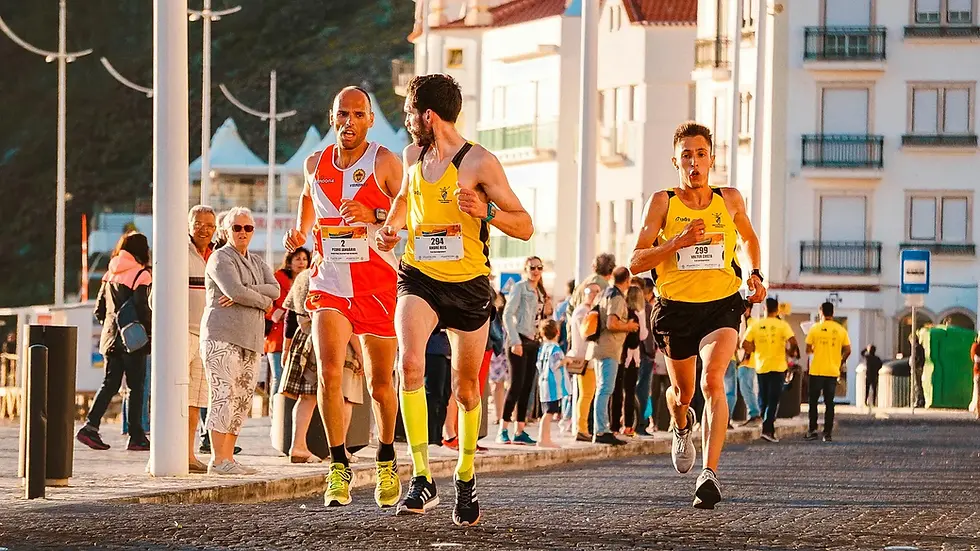
Nothing about their presence changed your physical capacity. Your lungs were the same lungs. Your legs were the same legs. Something about having them there unlocked a version of you that does not show up when you are by yourself.
I have been thinking about this a lot in the context of my coaching work.
The insight
When people get stuck, they often assume it is a capability issue. More skill, more knowledge, more experience, more discipline. The honest answer is usually different. Most of us already have what we need to move. What we are missing is the conditions under which we actually use it.
This is where a coach comes in.
In chemistry, a catalyst does not become part of the final product. It does not add anything to the reaction. It lowers the energy required for the reaction to happen. The reaction was always possible. The catalyst makes it possible sooner, with less resistance.

A good coach works the same way for a person.
The client already knows what they want. They already have the skill, the experience, the resources in some form. What they lack is the environment in which their own thinking becomes sharper, their decisions become braver, their action becomes faster. A coach creates that environment.
It happens in small, almost boring ways. A question that cuts through the story they have been telling themselves for six months. A silence held long enough for the real answer to surface. An attention so focused on them that they finally hear themselves clearly, maybe for the first time in years.
I have watched clients arrive at decisions in 45 minutes that they had been circling for two years. The decision was always available to them. The catalyst was not.
There is a reason athletes at the top of their game still have coaches. A coach exists because performance at the edge of your capacity is rarely something you can generate from inside your own head. You need an external presence that sees what you cannot see from your own vantage point, asks what you cannot ask yourself, and holds a standard you would lower when nobody is watching.
Once the catalyst does its work, the reaction continues on its own. The client does not need the coach forever. They need them at the specific moments where the energy required to move is higher than what they can generate alone.
This has shifted how I think about my own work. Teaching, advising, guiding each have their place and their usefulness. The core of coaching sits somewhere else altogether. A coach creates the conditions under which a person becomes more of themselves, faster.
The practice
This week, notice one area of your life where you have been circling. Something you know the answer to but have not acted on. A decision you keep reopening. A conversation you keep postponing.
Ask yourself honestly: what is the energy gap between where you are and where the action needs to happen? And who, or what, could close that gap?
Sometimes the answer is a friend. Sometimes it is a deadline. Sometimes it is a coach. The point is to stop assuming you should be able to do it alone. High performers rarely do.
See you next time.
P.S. If you are sitting with a decision that has been open for too long, sometimes one conversation is all it takes to shift the loop. Let's Talk.



Comments